Looking for a jumpstart with STEM integrated instruction? Think about involving parents and the community in classroom activities. Surveying parent talents and skills is a great place to start. You can actually find a place for all parents regardless of past work experience. Be creative! Enlisting parents as STEM helpers includes community workers naturally. So – how to enlist these helpers? A note explaining STEM and the need for parent involvement in STEM instruction will help. List some talents that could help students and STEM learning in the classroom. Some might be:
Engineer
Lawn maintenance
Doctor
Nurse
Hospital worker
Homemaker
Mechanic
Artist
Teacher
Writer
Researcher
Office worker, etc.
Parents may feel that their abilities won’t help in the classroom but a brief description of how they can serve is a real motivator to get all involved. Don’t forget Career Day in November! This might just be the perfect day to STEM recruit!!
I was with first grade students on 9/11, that tragic morning the Twin Towers went down. Within what seemed like minutes parents were rushing to school to sign their children out early. There sat twenty curious children wondering why everyone was leaving class so early in the day. I decided to speak with the children about what was happening before they left me. Knowing the time constraints on most parents, I wanted to ease as many fears as I could. I briefly explained the situation. I ended the discussion by telling my students that their parents might be upset. I told them if they were calm and well-behaved it would help their parents. I reassured them they would all be fine and we’d all be back together in the morning. The next day began with further discussion. Most of the children had seen the news and needed to talk more. We did. I felt they all handled the information very well and then one of my students raised her hand. “Yes Jenny?” I asked.
“Ms. Ellington, why do I feel safer here in the classroom than I do at home?” Other children nodded. This question has played over and over in my mind since, while the world has become increasingly unsafe. For many students – the classroom is their only safe place.
How can teachers make children feel safe in an unsafe world? Communication is key. Being honest with children instills trust. Withholding information creates mistrust. Encourage classroom discussion on current events – tempering topics discussed with age appropriateness. This is easily accomplished by providing social studies curriculum as part of an integrated classroom experience.
There are many other ways to make sure that your classroom is a safe place for students. What strategies do you use in your classroom?
This is my favorite time of year! Students work so hard throughout the year (regrettably – intently focused on test taking) that they deserve to have opportunities to “shine” while enjoying the activities (once considered best practice) that they should have learned with throughout the year.
Some of the activities in my classrooms have been:
Survey students – ask them what they would like to learn about in the last weeks that you may not have touched on during the year.
Review favorite stories and/or units taught throughout the year using the arts and hands-on activities that scheduling may not have allowed time for during the year.
Presenting plays
Creating scenery backdrops
Puppetry
Create puppet stages using file folders, pvc pipes, and cardboard boxes
Writing songs that review content learned
Storytelling
Publish a class magazine featuring student writing and illustrations
Plan a concert for grade levels featuring individual classroom presentations
Involve parents – invite parents to an end-of-year pizza or ice-cream party
Plan interesting field trips – unique to your school’s geographic area
Plan unit instruction unique to geographic areas – i.e.: Ocean/sea life studies, mountain/wildlife studies, desert habitat studies, etc.
Closing out your school year with enjoyable learning activities will leave you and your students eager to come to class the last few weeks and looking forward to returning in the new school year. Enjoy!
It doesn’t matter how long we have taught – there will always be moments that stay with us forever. Below is one of the moments that has stayed with me.
I wanted to scream! They were tugging at me all day. “Ms. Ellington, Ms. Ellington!” is all I could hear them say. Don’t get me wrong. I didn’t mind the tugging although it could be tedious at times. I just wished at some point some of the children would learn to raise their hand to get my attention. I know, I know… it’s hard for five-year olds to remember, especially when they need something. Besides, kindergarten children are like a “garden of flowers” and we all know flowers need tending.
Young children live in a world of ego. On this particular day, ego had overtaken our classroom and was increasingly trying. Riley soiled his pants. Jenny fell and scraped her knee. Kevin’s mom and dad argued while driving him to school – leaving him crying for home all morning. So many things to tend to and I still had to teach at some point.
To make matters worse, the art activity I planned for the children was harder than I thought. So there I was, running from child to child trying to help each complete their project. There they were, twenty little budding flowers all in need of nurturing at the same time.
As I frantically tried to attend to everyone, my thoughts flashed back to a Swedish friend named Heli who worked at a restaurant I sang at in my “singing” days. Heli was always smiling and pleasing everyone. One night patrons and coworkers were running her ragged. She looked at me and in her stealthy Swedish accent said, “If I hear my name one more time, I’m going to hit the ceiling!”
My thoughts of Heli were broken when Katey and Brittany at once yanked at my sleeve. “Ms. Ellington, Ms. Ellington!” they shouted. Hmm… Again I thought of Heli and looked at their faces. With hands on hips and one raised eyebrow I said, “If I hear Ms. Ellington one more time I’m going to hit the ceiling!”
The room fell silent and I could see some of my little ones, mouths open in awe, slump in their chairs like wilted flowers in need of a drink. It was an awkward moment, eyes meeting eyes and nothing to say. For that moment, the weight of my day subsided and I was able to catch my breath though regrettably, it now seemed hard for the children to catch theirs.
Then, as if in slow motion from the back of the room, Joanna tip-toed quietly to me. She approached, face aglow. In front of me, she deliberately placed her hands on her hips, raised one eyebrow, and with a missing front toothed grin said, “Oh, Ms. Ellington!”
We all burst into laughter and the moment of peace I thought I experienced gave way to a renewed sense of enthusiasm at being with these lively children.
These days, when I am caught up in classroom stress, I still see Joanna standing before me with that missing front toothed grin.
This is a good time to reflect on positive teaching memories. I look forward to hearing about yours! Thanks in advance for leaving a reply and sharing!
In his postlude to The Mozart Effect author Don Campbell shares miracle stories of treatment and cure through music. Excerpts recount music and its role in the treatment and healing of abuse, pain, aggressive and antisocial behavior, attention deficit disorder, depression, developmental delays, high blood pressure, etc. The benefits of music are limitless.
As the American educational system seeks to cut the arts from classroom experience, we see children and adolescents seek out more available forms of art – usually portraying the more violent and dark side of life. Young people perceive, and then opt to imitate the art that fuels their imagination.
Education can offer a positive approach to fueling that imagination leading toward the productive lives we want our children to meet by providing a healthier experience.
There are those trying to do that. Be sure to watch as CBS’s 48 HOURS presents The Whole Gritty City, Saturday, February 15th at 9 p.m. ET/PT.
Some say society is ill and we need to do something to heal it. Will we help?
“Each illness has a musical solution. The shorter and more complete the solution, the greater the musical talent of the physician.”
I’ve taught for many years in a system that I have often questioned when it comes to students and learning disabilities. As an outside-of-the-box thinker, I’ve always hoped for more freedom in teaching to reduce the necessity for a child being labeled as learning disabled when I thought there might be a better way.
In my opinion, schools need to offer a more “balanced” curricula including both visual and performing arts as well as extended opportunity for inquiry and exploration. If offered, I believe we would have a much smaller ESE population. Walk into any ESE class and you will find talented students in these areas. If not, you’ll find students who lack focus because their minds are sparked with imagination and their personalities are bursting at the seams from the skill and drill activities they take part in.
Google search famous people with learning disabilities and you’ll find less than average students who had the tenacity and intrinsic abilities (not valued by education) to prove their teachers wrong. I share a list and a YouTube presentation. Both are inspiring and encouraging.
Famous people with learning disabilities:
ADD/ADHD
WillSmith, Jim Carey, Tom Cruise, Sylvester Stallone, Robin Williams, Whoopi Goldberg, Michael Jordan, Bruce Jenner, Magic Johnson, Terry Bradshaw, Babe Ruth, Greg Louganis, Vince Lombardi, Pablo Picasso, Ansel Adams, Vincent Van Gogh, Salvador Dali, Ernest Hemingway, F. Scott Fitzgerald, Leo Tolstoy, Robert Frost, and Edgar Allen Poe, Bill Gates, Ted Turner, Malcolm Forbes, Andrew Carnegie, William Randolph Hearst, Henry Ford, FW Woolworth, Walt Disney, Steven Spielberg, Alfred Hitchcock, Henry Ford, Benjamin Franklin, Thomas Edison, Orville Wright, Wilbur Wright, Alexander Graham Bell, John Lennon, Elvis Presley, Cher, Buddy Rich, Beethoven, Mozart, Handel, President John F. Kennedy, President Thomas Jefferson, President Abraham Lincoln, President Dwight Eisenhower, President George Bush, and President George W. Bush, Winston Churchill, Albert Einstein, Stephen Hawking, Nicolai Tesla, Louis Pasteur, Galileo, and Sir Isaac Newton…
The list goes on. What were some of them told and what did they share?
Sydney Smith said, “The real object of education is to give children resources that will endure as long as life endures; habits that time will ameliorate, not destroy; occupation that will render sickness tolerable, solitude pleasant, age venerable, life more dignified and useful, and death less terrible.”
Reading, writing, and math are all important but there has to be more if we are to help our students actualize the above realities.
If you’re still with me – thanks for reading and listening!! I’d love to hear your thoughts on this…
I love to teach and I’ll admit, new education trends find teaching tasks taking up most of my wakeful time. A recent lengthy bout with pneumonia however, forced me to take time to rest. It also found me taking up a creative passion from long ago – crocheting. I found the break from “thinking” about teaching, expectations, and test scores refreshing and I believe it helped me heal quicker – both physically and mentally.
The link between creativity and mental and physical health has long been established. How are you feeling these days? Does your health or mental state need a lift? As George Lois stated, “Creativity can solve almost any problem. The creative act, the defeat of habit by originality, overcomes everything.”
Teacher work loads and stress seem less cumbersome when balanced with a creative activity. What’s your creative passion? Not sure what it is? Listen to Sir Ken Robinson discuss “Finding Your Element”.
Are you finding time for your creative passion? Remember – you have a life outside of work that only you can make fulfilling. Find time for a creative break today!
In 1918, a special commission of the National Education Association presented a set of goals on the “purposes of school”. The list included:
providing the child with a sense of ethics
teaching the child responsibility for his/her own health
teaching the child sensitivity toward the responsibilities of citizenship
mastery of the three “R’s”
teaching the child to use leisure time well
encouraging worthy human relationships with family and friends
teaching the child to make a living
We have come to teach a new generation of students and the goals these days seem to focus on teacher quality and offering great schools for students to learn in. While the Common Core Standards stress highest student achievement for all I have to wonder – wouldn’t the goals presented in 1918 be practical for our students today and if so – why are we not paying more attention to them?
Today was the last day of school for my kindergarten students. One child came up and said she had a gift for me, but forgot it. I told her she had already given me a wonderful gift. Then I thought of Ajayla…
There is a saying, “When the student is ready, the teacher will appear.” Sometimes, teachers come in small packages…
“Open mine, open mine!” they shouted. The children sat on the floor in front of me – eyes wide, waiting for me to open the gifts they had brought their teacher. Most children in this very special group of first graders beamed with pride, but I had mixed emotions because some not able to share a gift might be hurt.
There were many gifts this last day of school. From a multicolored spray of wild flowers in a crystal vase to several teacher books.
Amid their excitement, giggles, applause, and me thanking the children, one of them anxiously called out.
“Ms. Ellington!” Ajayla said, eyes twinkling with her effervescent smile.
“I have a gift for you!”
“You do?” I asked.
“Yes, it’s in my backpack. Would you like me to get it for you?” she asked.
“Of course!” I nodded. Ajayla, for the young age of seven was an old soul, wise beyond her years. The children looked at each other curiously, some watching her every move as she enthusiastically raced to her backpack for the gift.
Ajayla returned with tightly cupped hands and a radiant look on her face. She stood before me, her back to the others. A few children leaned to see around her, and then all sat motionless – curious to see what the gift would be.
“Close your eyes and hold out your hands,” she whispered in my ear. I smiled as the colorful beads, perfectly placed in her braided hair tickled my cheek.
The children giggled. I closed my eyes and held out my hands. I waited.
“Can you feel it?” she asked.
I felt nothing. Eyes still closed, I moved my hands slightly forward straining to feel. I shook my head. “I don’t feel…” I began to say. Then suddenly, I felt the gentle brush of her warm fingertips resting on mine.
“Do you feel it now?” she whispered. A rush of emotion went through me.
“Yes, Ajayla, I feel it!” I said.
I opened my eyes and looked at her. She was glowing. Her fingers now clutching mine. “It’s a wonderful gift!” I exclaimed. Ajayla leapt forward and wrapped her arms around me. It was clear the other children understood. They broke into a round of applause.
“I’ll never forget you,” she said. “I’ll love you forever and wherever I go you
will always be here in my heart.”
I held her close. As I did, the others began to surround us, each reaching to be part of our embrace.
“Boys and girls,” I said, “Ajayla has given us all the greatest gift today. Giving and receiving gifts is wonderful, but the greatest gift you can ever give or receive is not one you can see or touch.” I paused to hold back my tears. “You can feel it though.”
Welcome to Teacher View Today - a forum for “teacher voice” and a platform for expressing concerns, sharing success stories and imparting strategies to help others successfully maneuver each day in the classroom. Whether teaching K-12 or college, we all share like experiences. I hope you’ll consider Teacher View Today your “go to” place for collaboration outside your classroom. Nancy Ellington
The Real Object of Education…
The real object of education is to give children resources that will endure as long as life endures; habits that time will ameliorate, not destroy; occupation that will render sickness tolerable, solitude pleasant, age venerable, life more dignified and useful, and death less terrible. Sydney Smith
Never be bullied into silence. Never allow yourself to be made a victim. Accept no one's definition of your life; define yourself.
Robert Frost
Stop Questioning?
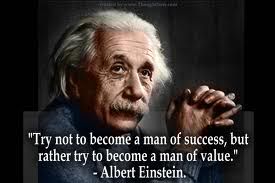
"The important thing is not to stop questioning. Curiosity has its own reason for existing." Albert Einstein
A child’s spontaneity
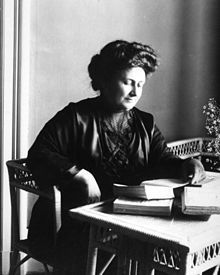
“We cannot know the consequences of suppressing a child's spontaneity when he is just beginning to be active. We may even suffocate life itself. That humanity which is revealed in all its intellectual splendor during the sweet and tender age of childhood should be respected with a kind of religious veneration. It is like the sun which appears at dawn or a flower just beginning to bloom. Education cannot be effective unless it helps a child to open up himself to life.”
Maria Montessori
Collaboration
Collaboration is a gift. We collaborate with others throughout our lives and when we create a really special bond, are always surprised at the richness the encounter can bring. Take advantage of the richness collaboration can bring to your table.
Working with others makes any process less stressful. Sharing concerns as well as successes lightens your load!
Thoughts on writing
Writing, to me, is simply thinking through my fingers.
Isaac Asimov
Teacher Income…
Mean instructional salaries according to the Bureau of Labor Statistics updated March 27,2012…
Kindergarten/Elementary/
Secondary School - $56,790
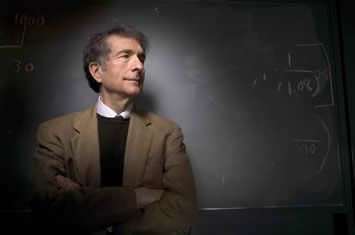
“I want my children to understand the world, but not just because the world is fascinating and the human mind is curious. I want them to understand it so that they will be positioned to make it a better place. Knowledge is not the same as morality, but we need to understand if we are to avoid past mistakes and move in productive directions. An important part of that understanding is knowing who we are and what we can do… Ultimately, we must synthesize our understandings for ourselves. The performance of understanding that try matters are the ones we carry out as human beings in an imperfect world which we can affect for good or for ill.” Howard Gardner
As educators we seem to be inundated with stress everywhere we look these days. It’s during our most stressful times however, that we can actually make the greatest gains in life.
Eleanor Roosevelt said, “You gain strength, courage and confidence by every experience in which you really stop to look fear in the face. You must do the thing, which you think you cannot do.”
How do you cope with classroom stress?
This Time
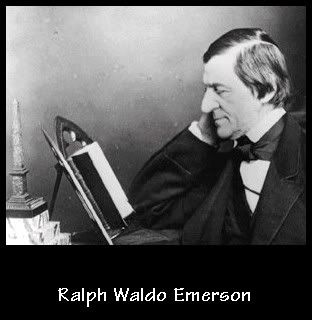
Ralph Waldo Emerson said, “This time, like all times, is a very good one, if we but know what to do with it.”
Crazy Busy
Balance is important in our lives. In today’s world we find little time to do much more than work and eek by with everything else.
Edward Hallowell, M.D. says, “Simplifying your schedule is a matter of living in a way that reflects your life’s natural rhythm.” He authored a book called CrazyBusy: Overstretched, Overbooked, and about to snap: Strategies for coping in a World Gone ADD. His seven strategies for coping with time crunches are –
1. Don’t multitask
2. Keep to-do lists short
3. Delegate
4. Be positive
5. Limit interruptions
6. See organization as a means, not an end
7. Don’t lose sleep over it
Hallowell, E. (2006). Stop the Insanity. Psychology Today, 39(5), 37.












 Teacher Views Today