Well worth the read!
ASCD Express 8.07 – The Neuroscience of Joyful Education.

Posted in Classroom Management, Grades 6-12, Grades K-5, Higher Education, Motivation, Students
Tagged ascd, Education, neuroscience, research, science
Polychronic/Monochronic Organizers
Are you familiar with polychronic and monochronic organizational styles or high context/low context communication? These styles are culturally based and learning about them may serve to help us better relate to those we live and work with. The following is a link to one of the most concise articles I’ve found on this…
http://www.harley.com/writing/time-sense.html
As for the polychronic organizer the book “A Perfect Mess” may shed some light on why many people (actually 2/3’s of us) organize the way we do. If you take time to look into this, I encourage you reflect on those students and colleagues who may drive you crazy with their seeming lack of order which is anything but.
http://www.careerbuilder.com/Article/CB-646-The-Workplace-Is-a-Messier-Desk-Better/
http://www.ericabrahamson.com/mybooks/aperfectmess.html
On how culture affects communication…
http://www.youtube.com/watch?v=8tIUilYX56E
Comparative Time Orientation Chart…
| Monochronic (Linear) Time Orientation | Polychronic (Circular)Time Orientation |
| Views time as an entity to be saved, spent, or lost | Views time as fluid, flexible |
| Completes one task before starting another | Works on multiple tasks before finishing any one |
| Focuses on the task to be completed within a certain time frame | Focuses on and nurtures the relationships represented by the tasks |
| Separates work from family and social life | Views work, family and social life as one |
| Seeks to maintain rigid appointment schedule | Reacts as the day’s events evolve |
Low/High Context Chart…
| Low Context Culture | High Context Culture |
| Believes in explicit (literal) communication | Utilizes figurative and approximate language |
| Follows the letter of the law | Believes laws can be shaped by circumstances |
| Keeps job tasks separate from relationships | Sees task as a function of the relationship |
| Uses direct style in writing and speaking | Prefers indirect style in writing and speaking |
| Values individual initiative and decision making | Expects decision making within the relationship |
| Relies on verbal communication | Relies on nonverbal communication |
| Becomes uncomfortable with silence | Respects and utilizes silence |
| Presents facts, statistics and other details | Subordinates use of detailed information |
Mechanistic/Humanistic View of Employee Chart…
| Mechanistic Employee | Humanistic Employee |
| Works for employer in exchange for wage sand benefits | Thinks of self as group member with personal ties |
| Changes jobs if better opportunity arises | Remains on the job out of loyalty to “family” |
| Can be dismissed if not performing job satisfactorily | Keeps job even if performance is unsatisfactory |
| Views self as a commodity | Views self as part of a “family |
CrossTalk: Communicating in a Multicultural Workplace, Sherron B. Kenton and Deborah Valentine, Prentice-Hall, 1997.
As educators, we are much like the cogs of a wheel creating forward motion. Diverse organizational styles and communication are needed to meet the diverse needs of our students. Having like organizational styles and communication is akin to all cogs spinning in the same direction going nowhere.
The dichotomy of the educational system is it touts monochronic values while imposing copious polychronic tasks. This in itself can cause confusion which produces stress, which in turn detracts from effective teaching and learning much like the wearing down of each cog that is not benefiting from the thrust of its opposite. Having a better understanding of the above styles can help us all in our interactions with each other.
We all have so much to share…

Posted in Back to school, Classroom Management, Grades 6-12, Grades K-5, Higher Education, Lesson Planning, Motivation, Multiple Intelligences, Students, Teacher Evaluation
Tagged Communication, Decision making, High context culture, Low context culture, Organizational styles, Polychronicity, Time, Time management, Work
Reblogged from http://www.Living on the Cheap.com…
We’ve gone through all the sales circulars and picked out the best deals on school supplies for this week. Some items are so cheap that they are free.
via Best school supply deals 7/29-8/4.
Fifteen states have scheduled sales-tax holidays or tax-free weeks in August. Check out our list and your state\’s details to see what you can save on your back-to-school shopping.
via Sales tax holidays and tax-free weeks for 2012.
To ensure student success, here’s something to keep in mind throughout the school year…
The Role of Mistakes in the Classroom | Edutopia.
The current economic climate may find fewer families contributing to classroom school supplies and state funding severely depleted this year. Less money per student will have teachers doing double duty when buying back to school supplies. They will shop for their own children and the children in their classes as well. Teachers launch school supply buying plans at the end of the previous school year and for good reason. With the steady decline in teacher salaries because of state and federal budget cuts, every penny spent must be worth the spending. Here are a few tips on saving big on school supplies.
Get the most from back to school shopping by ensuring your hard-earned dollars are well spent! Happy shopping!
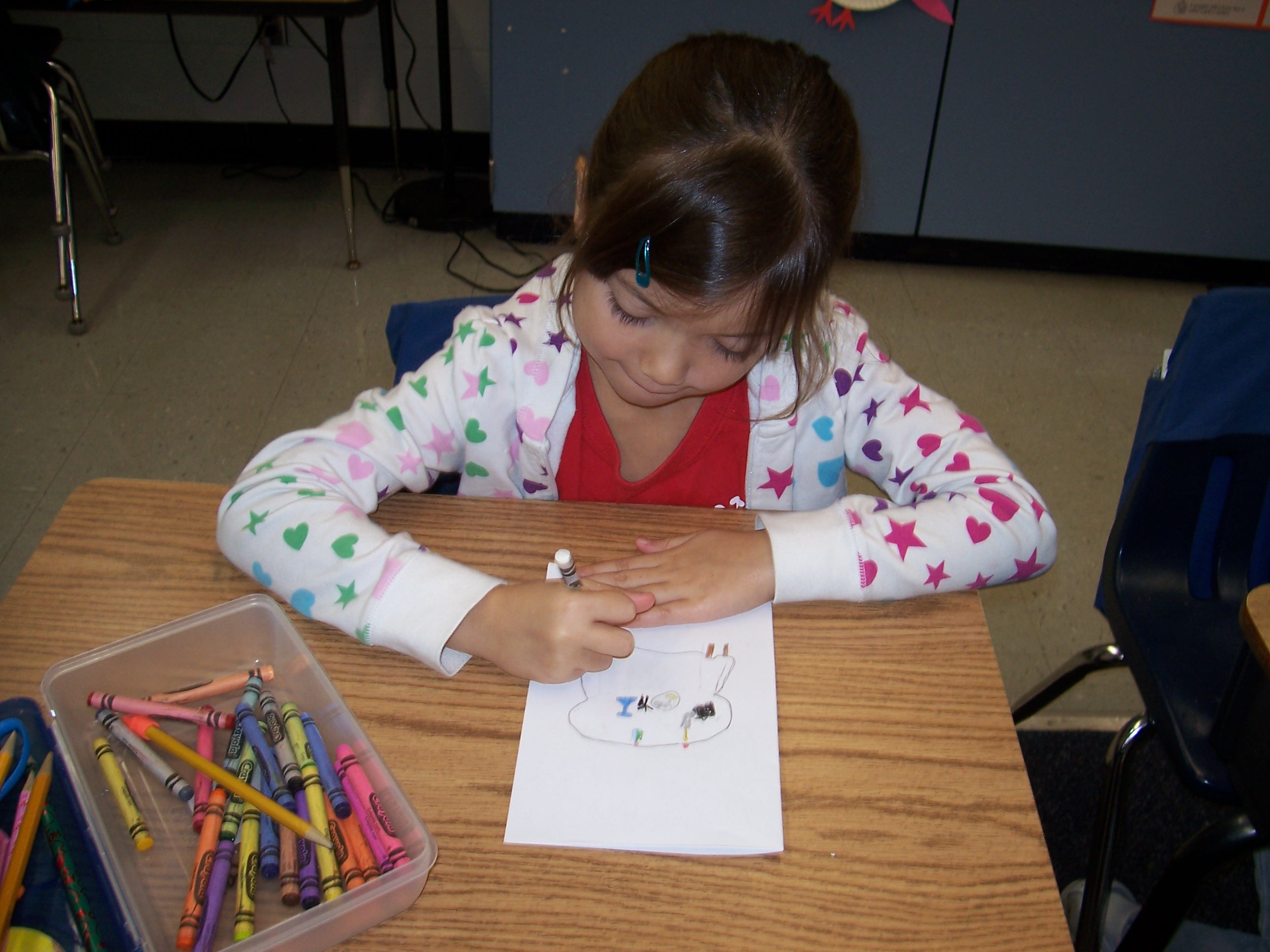 Paper, writing tools, and a variety of items – check the treasures in your own back yard for some amazing finds!
The current economic climate contributes to a severe lack of discretionary funds for classroom materials. Because children learn differently, this could put a dent in differentiated activities that lend themselves to a variety of learning styles. How can teachers supplement classroom materials without paying for items themselves? First, make a list – think about classroom activities from last year. What consumable items were plentiful? What consumable items were needed most often? Making a list of needed items and referring to it over time will see you in good stead to find or ask for items from others long before needed. Here are five more tips on obtaining some worthwhile materials for classroom use.

Dictionary.com‘s 21st century lexicon defines learning style as an individual’s mode of gaining knowledge, esp. a preferred or best method.
What’s your learning style? Have you taken a learning styles inventory lately? Individual learning styles may change over time as the learner becomes acclimated to doing things in different ways through life experiences.
Teachers are responsible for meeting the needs of a variety of learners – all having a variety of learning styles. Often, teachers teach the way they learn. This may not however, be in the best interest of every learner. Having a good understanding of learning styles can guide planning for successful differentiated instruction.
There are many learning style assessment sites that will help you discover your style of learning and teaching. Curious? Check out…
http://www.acceleratedlearning.com/method/test_flash.html
or
http://www.edutopia.org/multiple-intelligences-learning-styles-quiz
Enjoy!
learning style. (n.d.). Dictionary.com’s 21st Century Lexicon. Retrieved July 11, 2012, from Dictionary.com website: http://dictionary.reference.com/browse/learning style
Posted in Classroom Management, Motivation
Tagged learning style, Learning Theories, Methods and Theories, Visual learning










I don't sew, but I write -- patching together pieces of my life.
The official website of Blue for Black
Desenvolvedor Web apaixonado por WordPress
Just another WordCamp
The Queen City's WordPress Conference
Come Join Us as We Begin Our Marriage Journey
A Renaissance Soul blogging on traveling, books, life, and any other topics that catch my interest.
Creative Nonfiction by Andrea Badgley
Welcome to your new home on WordPress.com
October 15, 2016


 Teacher Views Today