Thank you James Boutin! Your words will be appreciated by many!
ASCD Express 7.15 – Before Evaluating Teachers, How About Supporting Them?.

Thank you James Boutin! Your words will be appreciated by many!
ASCD Express 7.15 – Before Evaluating Teachers, How About Supporting Them?.

Posted in Employment, Grades 6-12, Grades K-5, Motivation, Teacher Evaluation
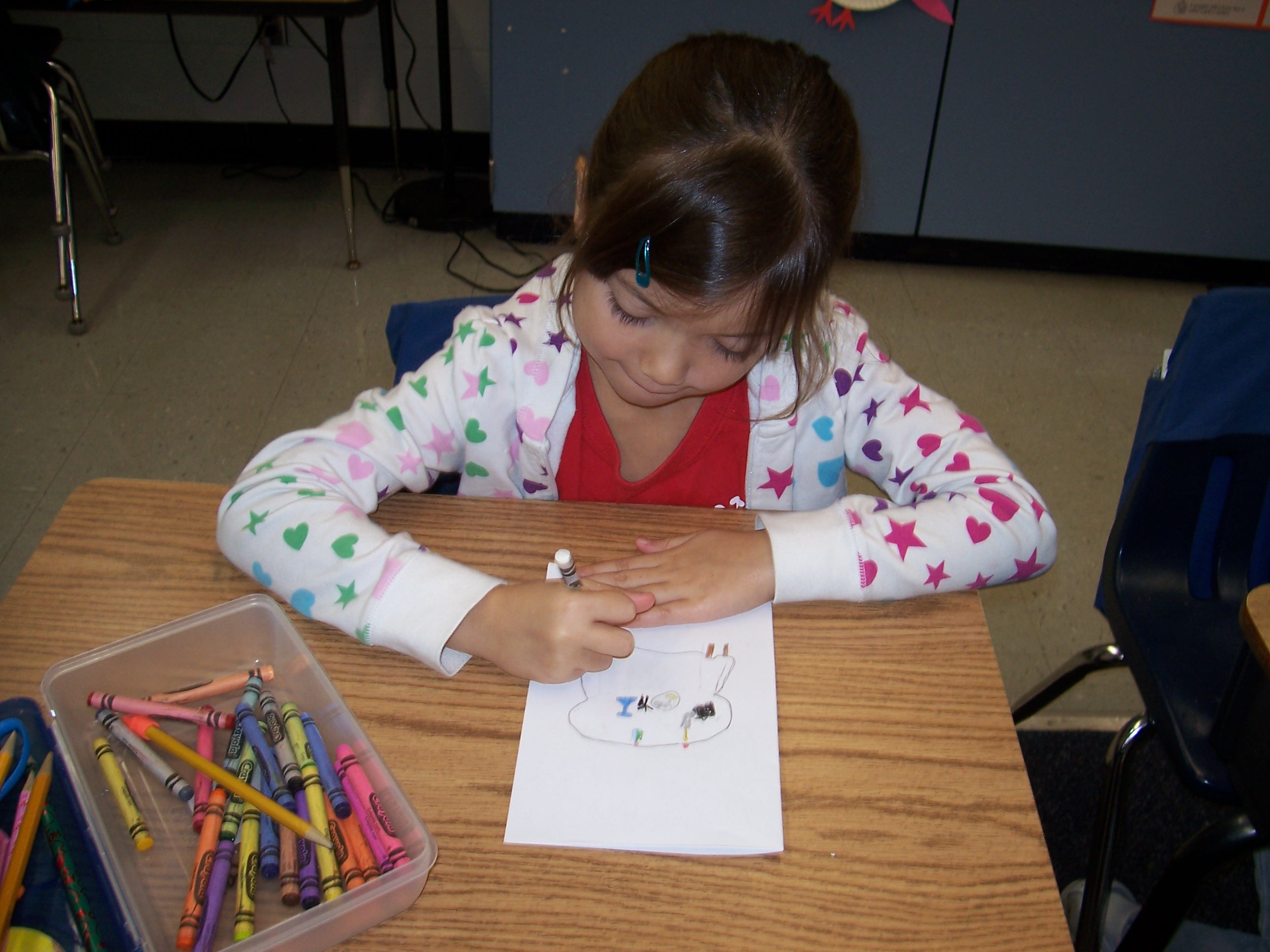 Paper, writing tools, and a variety of items – check the treasures in your own back yard for some amazing finds!
The current economic climate contributes to a severe lack of discretionary funds for classroom materials. Because children learn differently, this could put a dent in differentiated activities that lend themselves to a variety of learning styles. How can teachers supplement classroom materials without paying for items themselves? First, make a list – think about classroom activities from last year. What consumable items were plentiful? What consumable items were needed most often? Making a list of needed items and referring to it over time will see you in good stead to find or ask for items from others long before needed. Here are five more tips on obtaining some worthwhile materials for classroom use.

Dictionary.com‘s 21st century lexicon defines learning style as an individual’s mode of gaining knowledge, esp. a preferred or best method.
What’s your learning style? Have you taken a learning styles inventory lately? Individual learning styles may change over time as the learner becomes acclimated to doing things in different ways through life experiences.
Teachers are responsible for meeting the needs of a variety of learners – all having a variety of learning styles. Often, teachers teach the way they learn. This may not however, be in the best interest of every learner. Having a good understanding of learning styles can guide planning for successful differentiated instruction.
There are many learning style assessment sites that will help you discover your style of learning and teaching. Curious? Check out…
http://www.acceleratedlearning.com/method/test_flash.html
or
http://www.edutopia.org/multiple-intelligences-learning-styles-quiz
Enjoy!
learning style. (n.d.). Dictionary.com’s 21st Century Lexicon. Retrieved July 11, 2012, from Dictionary.com website: http://dictionary.reference.com/browse/learning style
Posted in Classroom Management, Motivation
Tagged learning style, Learning Theories, Methods and Theories, Visual learning
Throughout history educational systems have encouraged like thinking and like ways of work aka “the norm.” There have been those, however, who thrived with the mentality of thinking outside the norm. For many, this mentality was the right choice and produced intrinsically motivated history makers, such as Benjamin Franklin, Thomas Edison, Ayn Rand, Henry Ford, Walt Disney, and Steve Jobs. As any glimpse into history may show, outside the norm thinking has contributed the most significant contributions to society.
The rank and file of employed and unemployed workers today is a product of educational systems. Current unemployment rates should prompt review of the shift in education over the past 50 years to see why unemployment rates have reached such staggering heights.
In the early 1900s, emphasis placed teaching ethics, responsibility, independence, self-care, citizenship, mastery of the three R’s, encouragement of worthy human relationships, and how to make a living most important. The shift reveals classrooms where major emphasis is on reading, test taking, and alignment with a norm. Little to no time is spent on the development of critical thinking, creative thinking, rational thinking, or the development of aligned mental processes needed to adapt and prosper in an ever-changing work environment. Attainment of these skills set in motion the survival skills needed to make it when working as an employee is not an option. Unfortunately, extrinsic motivation determines future paths and intrinsic motivation is not encouraged.
Today’s curriculum must reflect children’s current and future needs, placing strong emphasis on molding intrinsic values that will enable youth to thrive as independent adults.
Dan Pink states “There’s a mismatch between what science knows and what business does.” After viewing his talk you may come to realize there’s a mismatch between what science knows and what education does as well.
If you’re like many teachers, you haven’t seen growth in your take-home pay for some time. You may even notice a decline in take-home dollars – definitely not a good scenario in today’s uncertain economy. Do you have a need to supplement your teacher income?
As a teacher, you have skills to open the door to a variety of supplemental income opportunities. They include tutoring, writing, editing, lecturing, and online teaching to name a few. A quick Internet search (supplemental income for teachers) will show more possibilities than you may have realized.
Looking for adjunct teaching positions? Check out…
http://www.indeed.com/q-Adjunct-Online-Faculty-jobs.html
Experiencing a steady decline in teacher income? Boost it by using your teacher skills! You may find a new venue for income and an enjoyable sideline as well!
Another impressive moment in “stand against bullying” …
Bullying is a problem that affects everyone. The inaugural June 3rd Kidsbridge WALK2STOP BULLYING at The College of New Jersey was designed to raise awareness of positive social strategies to create kinder, more empathetic interactions among kids, teens and adults.
Research shows that empathy is declining precipitously in our society. Kidsbridge aims to reverse this trend by teaching youth and educators to not be afraid to stand up and speak out when they see bullying behavior. That is the only way things will get better.
Some 400 walkers completed a two-mile course following an energetic presentation by Grammy-winning kids’ entertainer Amy Otey (Miss Amy) and a ribbon-cutting by TCNJ President Barbara Gitenstein, New Jersey state lawmakers, walk co-chairs and Kidsbridge board Chairman Frank Lucchesi.
After their trek around campus, many walkers visited the open house at the Kidsbridge Tolerance Museum in TCNJ’s Forcina Hall, where volunteers answered questions.
The only…
View original post 91 more words
Posted in Uncategorized
I thought about the front-page article I read (School suffers rising chaos) while listening to the students at the Pinellas Youth Symphony’s concert at St. Petersburg College in St. Petersburg, Florida one evening. I watched and listened to students from every race and creed enthusiastically share their passion for music while delighting a capacity audience.
It was such a stark contrast to the events at a local middle school and far too many schools across the nation – behavioral chaos. In a society in which learning to pass tests reigns supreme, programs in the arts are easily cut for lack of funding and we wonder why behaviors escalate in our schools.
We need only look at the work of Jose Antonio Abreu in Venezuela to see how the arts can transform a society by bridging the gap between rich and poor while increasing intellectual and emotional capacities in children. From an original group of 11 impoverished children Abreu built the more than 300,000 student El Sistema, a nationwide organization of more than 100 youth orchestras made up of students from poor and middle-class neighborhoods. As Abreu states: “It is evident that music has to be recognized as an element of socialization, as an agent of social development in the highest sense, because it transmits the highest values: solidarity, harmony, mutual compassion.”
Perhaps it is time to implement a proactive approach to our societal dilemmas by providing all our children means for a better way.
Modified from my original opinion published at http://www.tampabay.com
Long after the last child has left the classroom and a teacher rolls a cart of materials home to work on over the summer, the reality of what a “teacher’s summer” means sets in. For many, summer means teaching summer school – the extra income supplements a steady decline in teacher salary because of budget cuts and increased teacher expenses. There are professional development workshops to attend, doctor’s appointments to make and keep, and of course, a plethora of new materials to prepare for the upcoming school year. Too many things to do can find stress seeping into what should be a stress-free time. Summer is the time to “body de-stress” allowing it time to heal from a far too intense school year experience.
Create a meaningful summer by taking time to sleep in, laugh, read a good book, and find joy in simple things.
Sleep is the body’s natural healer. Be sure to get some extra winks in over the summer. You’ll feel better going into the new school year because you did.
Research shows that those who laugh more often stay healthier longer and heal more quickly. Watch a few good comedies with family and friends to lift your spirits, and lift others’ spirits as well.
Read a good book. There is something to be said for a book that takes you away to real or imaginary places without the stress and money involved in actually going there.
Find joy in simple things – they are everywhere! The warmth of the sun, the bluest of skies, a puppy enticing you to play, a child’s smile, and the pleasurable company of family and friends.
What are your plans for summer? Here’s hoping they’re meaningful and serve you well!
These are great tips to consider when teaching a class too!
Or at least, how some people best process oral-visual communication. But still, these are helpful things to be aware of, and the visual typography is a lot of fun.
Posted in Uncategorized









I don't sew, but I write -- patching together pieces of my life.
The official website of Blue for Black
Desenvolvedor Web apaixonado por WordPress
Just another WordCamp
The Queen City's WordPress Conference
Come Join Us as We Begin Our Marriage Journey
A Renaissance Soul blogging on traveling, books, life, and any other topics that catch my interest.
Creative Nonfiction by Andrea Badgley
Welcome to your new home on WordPress.com
October 15, 2016


 Teacher Views Today