

Welcome!
Welcome to Teacher View Today - a forum for “teacher voice” and a platform for expressing concerns, sharing success stories and imparting strategies to help others successfully maneuver each day in the classroom. Whether teaching K-12 or college, we all share like experiences. I hope you’ll consider Teacher View Today your “go to” place for collaboration outside your classroom. Nancy Ellington
The Real Object of Education…
The real object of education is to give children resources that will endure as long as life endures; habits that time will ameliorate, not destroy; occupation that will render sickness tolerable, solitude pleasant, age venerable, life more dignified and useful, and death less terrible. Sydney Smith-
Recent Posts
- From Decoration Day 1868 to Memorial Day 2024… May 31, 2021
- “Normal” Classroom Learning in the Age of Covid-19? July 13, 2020
- AFT endorses Joe Biden as Democratic nominee for president March 23, 2020
- Memorial Day 2019 – Memories May 27, 2019
- When students speak truth to power – Emma González – Marjorie Stoneman Douglas – Parkland, Florida February 19, 2018
Top Posts & Pages
- From Decoration Day 1868 to Memorial Day 2024...
- "Normal" Classroom Learning in the Age of Covid-19?
- AFT endorses Joe Biden as Democratic nominee for president
- Memorial Day 2019 - Memories
- When students speak truth to power - Emma González - Marjorie Stoneman Douglas - Parkland, Florida
- Gun violence in school – a child’s supposed "safe place"
- Mercedes Schneider: Betsy DeVos Will Use D.C. Power to Force Vouchers Down Your Throat — Diane Ravitch's blog
- Progressivism and the fulfilled life...
- Social Skills Instruction - Needed Now More Than Ever...
- Call for articles - points of view...
Define Yourself
Never be bullied into silence. Never allow yourself to be made a victim. Accept no one's definition of your life; define yourself.
Robert Frost

Stop Questioning?
"The important thing is not to stop questioning. Curiosity has its own reason for existing." Albert Einstein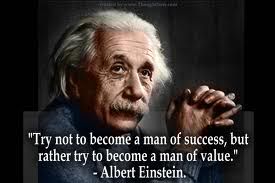
A child’s spontaneity
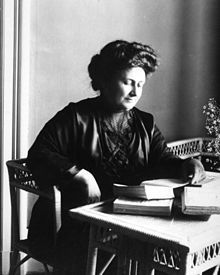
“We cannot know the consequences of suppressing a child's spontaneity when he is just beginning to be active. We may even suffocate life itself. That humanity which is revealed in all its intellectual splendor during the sweet and tender age of childhood should be respected with a kind of religious veneration. It is like the sun which appears at dawn or a flower just beginning to bloom. Education cannot be effective unless it helps a child to open up himself to life.”
Maria Montessori
Collaboration
Collaboration is a gift. We collaborate with others throughout our lives and when we create a really special bond, are always surprised at the richness the encounter can bring. Take advantage of the richness collaboration can bring to your table. Working with others makes any process less stressful. Sharing concerns as well as successes lightens your load!
Thoughts on writing
Writing, to me, is simply thinking through my fingers.
Isaac Asimov
Teacher Income…
Mean instructional salaries according to the Bureau of Labor Statistics updated March 27,2012…
Kindergarten/Elementary/
Secondary School - $56,790Higher Education - $51,630

Calendar of site posts…
February 2026 M T W T F S S 1 2 3 4 5 6 7 8 9 10 11 12 13 14 15 16 17 18 19 20 21 22 23 24 25 26 27 28 Archives
Blogs I Follow
- WordCamp Buffalo 2023
- Program Savvy
- Word Quilt
- Blue for Black
- Inevitable
- Rafael Funchal
- SJH Business Plan Training
- Righteous Guitar
- sjhatusertesting
- sjhstoredocs
- sjhnuxtest
- Site Title
- Estradas e bandeiras
- WordCamp Rochester
- WordCamp Buffalo 2014
- CJ and Lauren's Wedding
- {wendy was here}
- Butterfly Mind
- blueforblackblog
- #wcroc
Category Archives: Students
Time Management/Organizational Styles
Polychronic/Monochronic Organizers
Are you familiar with polychronic and monochronic organizational styles or high context/low context communication? These styles are culturally based and learning about them may serve to help us better relate to those we live and work with. The following is a link to one of the most concise articles I’ve found on this…
http://www.harley.com/writing/time-sense.html
As for the polychronic organizer the book “A Perfect Mess” may shed some light on why many people (actually 2/3’s of us) organize the way we do. If you take time to look into this, I encourage you reflect on those students and colleagues who may drive you crazy with their seeming lack of order which is anything but.
http://www.careerbuilder.com/Article/CB-646-The-Workplace-Is-a-Messier-Desk-Better/
http://www.ericabrahamson.com/mybooks/aperfectmess.html
On how culture affects communication…
http://www.youtube.com/watch?v=8tIUilYX56E
Comparative Time Orientation Chart…
| Monochronic (Linear) Time Orientation | Polychronic (Circular)Time Orientation |
| Views time as an entity to be saved, spent, or lost | Views time as fluid, flexible |
| Completes one task before starting another | Works on multiple tasks before finishing any one |
| Focuses on the task to be completed within a certain time frame | Focuses on and nurtures the relationships represented by the tasks |
| Separates work from family and social life | Views work, family and social life as one |
| Seeks to maintain rigid appointment schedule | Reacts as the day’s events evolve |
Low/High Context Chart…
| Low Context Culture | High Context Culture |
| Believes in explicit (literal) communication | Utilizes figurative and approximate language |
| Follows the letter of the law | Believes laws can be shaped by circumstances |
| Keeps job tasks separate from relationships | Sees task as a function of the relationship |
| Uses direct style in writing and speaking | Prefers indirect style in writing and speaking |
| Values individual initiative and decision making | Expects decision making within the relationship |
| Relies on verbal communication | Relies on nonverbal communication |
| Becomes uncomfortable with silence | Respects and utilizes silence |
| Presents facts, statistics and other details | Subordinates use of detailed information |
Mechanistic/Humanistic View of Employee Chart…
| Mechanistic Employee | Humanistic Employee |
| Works for employer in exchange for wage sand benefits | Thinks of self as group member with personal ties |
| Changes jobs if better opportunity arises | Remains on the job out of loyalty to “family” |
| Can be dismissed if not performing job satisfactorily | Keeps job even if performance is unsatisfactory |
| Views self as a commodity | Views self as part of a “family |
CrossTalk: Communicating in a Multicultural Workplace, Sherron B. Kenton and Deborah Valentine, Prentice-Hall, 1997.
As educators, we are much like the cogs of a wheel creating forward motion. Diverse organizational styles and communication are needed to meet the diverse needs of our students. Having like organizational styles and communication is akin to all cogs spinning in the same direction going nowhere.
The dichotomy of the educational system is it touts monochronic values while imposing copious polychronic tasks. This in itself can cause confusion which produces stress, which in turn detracts from effective teaching and learning much like the wearing down of each cog that is not benefiting from the thrust of its opposite. Having a better understanding of the above styles can help us all in our interactions with each other.
We all have so much to share…
Share this:
Posted in Back to school, Classroom Management, Grades 6-12, Grades K-5, Higher Education, Lesson Planning, Motivation, Multiple Intelligences, Students, Teacher Evaluation
Tagged Communication, Decision making, High context culture, Low context culture, Organizational styles, Polychronicity, Time, Time management, Work
Dance, Arts And Stevie Wonder Lead Kids On New Paths To Learning
Fortunate teachers! Fortunate students! This is teaching and learning at its best!
Dance, Arts And Stevie Wonder Lead Kids On New Paths To Learning.
Share this:
The Role of Mistakes in the Classroom | Edutopia
To ensure student success, here’s something to keep in mind throughout the school year…
The Role of Mistakes in the Classroom | Edutopia.
Share this:
Aurora, Colorado – thoughts from a teacher
The theater shootings in Aurora, Colorado, top a long list of senseless shootings that plague society. As each incident unfolds I recall an experience, I would rather forget. My second year of teaching in a high crime area began with a gun pointed at my head. Driving home from school one day I saw a young man flagging me down. I quickly scanned his surroundings and noticed a crashed car. That no other car was in sight gave me reason to pause. As I slowly approached, he aimed a large gun at me from the passenger’s side of my car. Our eyes met and I remember telling God I had too much to do – asking him to let me live. Though the gunman appeared to shoot, he never fired and I sped on toward the large crowd of onlookers gathered several blocks away.
At only eighteen, he tried to kill his girlfriend and her mother. He wrecked his car fleeing and was trying to carjack another – something he couldn’t achieve with the driver of the car he crashed into who fled as he was shot at. The newspaper revealed shots were fired at other passing cars. Why he didn’t shoot at me, I’ll never know. I was “blessed” that day, something many of the Aurora survivors have recounted of their horrific experience.
There are far too many similar incidents – Tuscan, Fort Hood, Birmingham, Omaha, Virginia Tech… As teachers, we know that perpetrators of such crimes may be any of the students we taught over the years. There are always the questions – once innocent children, students – at what point does their life change? What signs might we have seen in the time spent with them? Is there anything we might have done to redirect their path?
The victims – also someone’s child, someone’s student. Finding their way. Becoming who they are meant to be. Again the questions – why? In the wrong place at the wrong time? A victim of time and circumstance? How did we influence their paths toward becoming well-intentioned, effective members of society?
At times like these there may be no answers to the questions. Let us hold all involved in such tragic events in our thoughts and prayers – the ripple effects reach far and wide. Each involved has or had a life story to tell and any of us may have shared in it.
Share this:
Posted in Students, Uncategorized




 Teacher Views Today